
Welcome to the Mathematical World!
Prasanta Chandra Mahalanobis
Father of Modern Indian Statistics
Prasanta Chandra Mahalanobis (1893 – 1972) was born on June 29, 1893, in Calcutta (now Kolkata), India, into an intellectual and progressive Bengali family. His upbringing exposed him to literature, science, and philosophy from an early age. He studied at Presidency College, Kolkata, where he excelled in physics and mathematics, later moving to King’s College, Cambridge, in 1913. At Cambridge, he specialized in mathematics and natural sciences, but it was his exposure to statistics that would shape his career and legacy. During his stay in England, he was influenced by statistical ideas emerging in Europe and recognized their potential application in India, particularly in economic planning and social sciences.
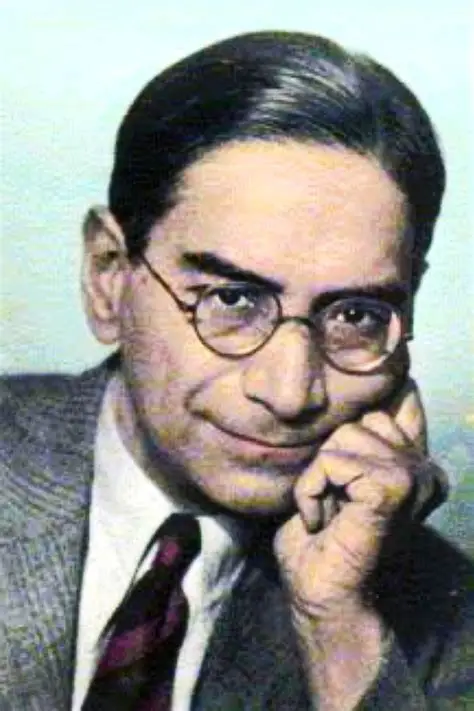
Mahalanobis is best remembered as the father of modern statistics in India. His most famous contribution is the formulation of the Mahalanobis distance, a measure in multivariate statistics that assesses the distance between a point and a distribution. This distance is defined as:
\[ D^2 = (x - \mu)^T S^{-1} (x - \mu) \]
where \(x\) is the vector of observations, \(\mu\) is the mean vector, and \(S\) is the covariance matrix. This measure became fundamental in cluster analysis, classification problems, and pattern recognition, and it continues to be widely applied in machine learning and data science.
Beyond this, Mahalanobis pioneered large-scale sample surveys in India. He introduced innovative sampling techniques such as “optimum stratified sampling” and laid the foundations of what later became the Indian National Sample Survey (NSS). These methods revolutionized how governments collected socio-economic data, enabling evidence-based planning. His statistical insights also contributed to meteorology, crop forecasting, and anthropometric studies.
Mahalanobis was not only a statistician but also a visionary planner. As an advisor to Jawaharlal Nehru, India’s first Prime Minister, he played a crucial role in shaping the economic direction of independent India. He was the architect of the Second Five-Year Plan (1956–1961), which emphasized heavy industry and large-scale development as the backbone of national progress. This “Mahalanobis Model” was based on mathematical and statistical analysis of investment priorities and resource allocation. Though later criticized for neglecting agriculture and small-scale industries, the plan set the foundation for India’s industrial growth.
In 1931, Mahalanobis founded the Indian Statistical Institute (ISI) in Kolkata, which became one of the world’s premier centers for statistical research. Under his leadership, ISI attracted global attention and collaboration from statisticians like Ronald A. Fisher. It also nurtured Indian talent, producing generations of mathematicians and statisticians who carried forward his legacy. Mahalanobis also played a central role in international statistical forums, contributing to the United Nations Statistical Commission.
Mahalanobis passed away on June 28, 1972, leaving behind a monumental legacy. He is remembered not only as a pioneering statistician but also as a nation-builder who applied mathematical reasoning to real-world problems. His birth anniversary, June 29, is celebrated in India as National Statistics Day. His life exemplifies the fusion of theoretical brilliance with practical application, and his work continues to influence disciplines ranging from economics and agriculture to artificial intelligence and data science.

All rights reserved by the Mathematical Unity
Contact: +8801400044645
Email: mathematicalhorse1453@gmail.com
Our Discord Server: Mathematical Unity [Ulus Riyadiyat]